How to prepare a stand for a trade fair: a step-by-step guide
Amako Expo4 November 2026
Preparing a trade fair stand is a process that starts several months before the event. It covers booking the space, choosing a contractor, approving the design, technical formalities and team logistics. To make the job easier, we have described the whole process step by step. Here you will find proven deadlines and a list of things worth remembering as you prepare.
In short
Start with the goal and the budget. The stand layout depends on whether you mainly want to present your offer, hold meetings with partners or launch a new product.
Stick to the timeline. Approving the design 6 to 8 weeks before the fair leaves time for unhurried production and for registering the structure with the organiser on time.
Remember the formalities. Organisers set their own deadlines. The stand design and any requests for power or rigging are usually due more than a month before the event.
Leave time for testing. The stand structure is usually ready the day before the hall opens. That is the ideal moment to set out exhibits and get the team familiar with the space.
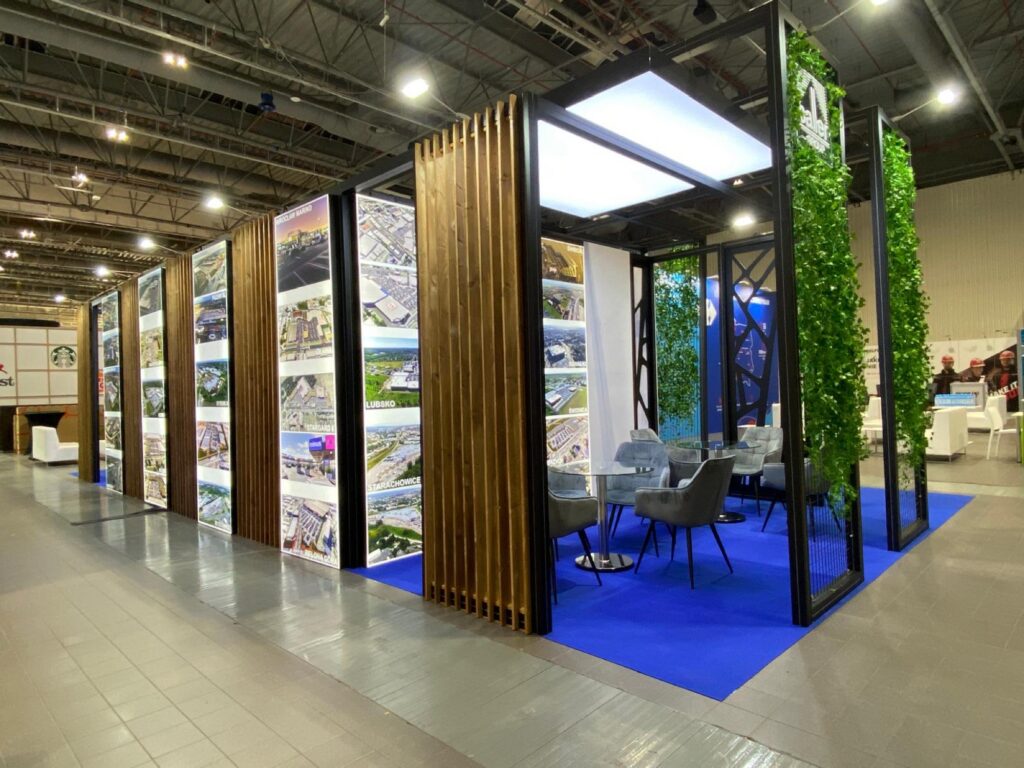
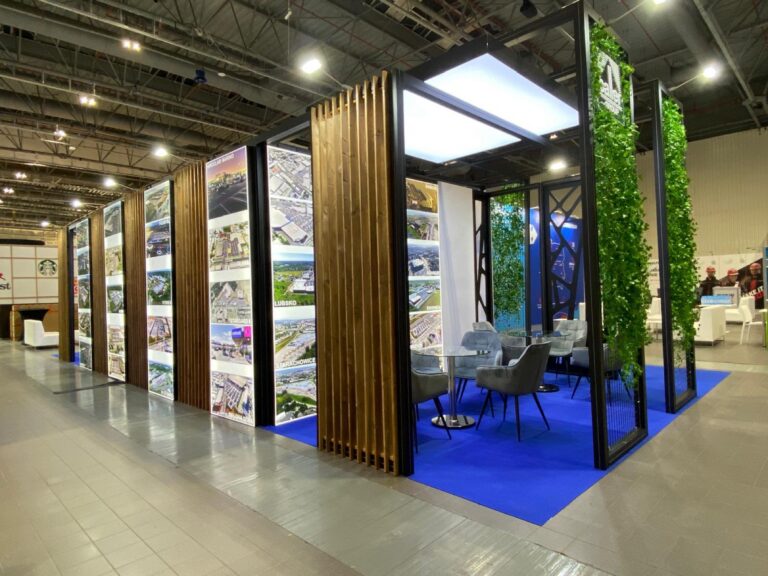
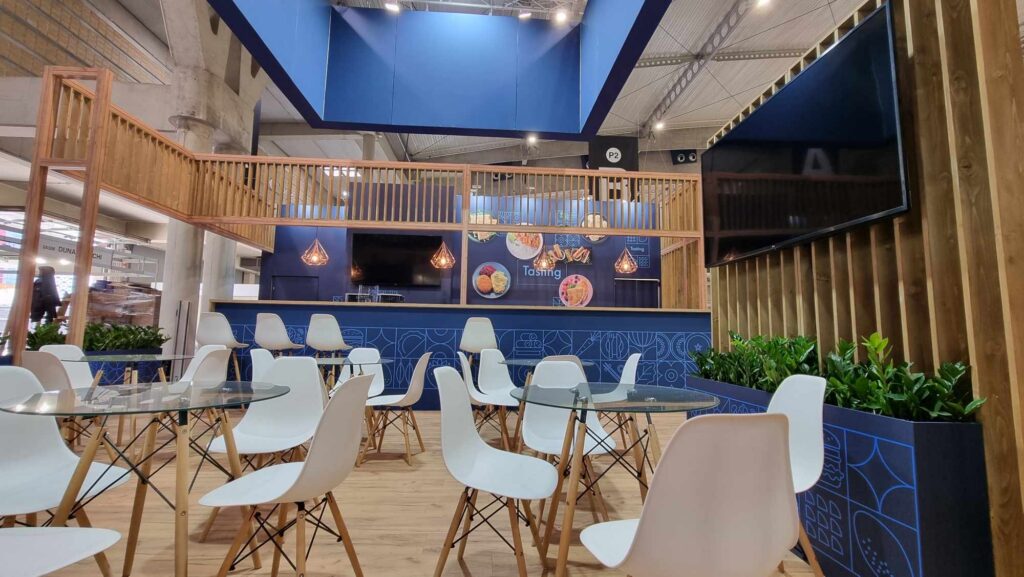
A finished trade fair stand with separate zones
Before you start: goal and budget
A stand is designed around a specific business goal. It is worth deciding what the company wants to achieve at the event:
Sales and promotion
Needs good product display and an open space where customers can easily reach the offer.
Business meetings (B2B)
Here a comfortable, quiet meeting zone or a separate meeting room matters more.
Product launch
The stand should catch the eye from a distance and invite visitors to take a closer look at the product.
Tip: Write down the company’s goal and attach a measurable figure to it (for example 40 sales conversations or 150 new contacts). That makes it easier to judge the return on investment afterwards.
Planning the trade fair budget
A trade fair budget is made up of a few core items:
Space rental from the organiser (some fairs add mandatory fees, such as a marketing or media package).
Stand construction (design, production, transport, assembly and dismantling).
Utilities and technical fees (power connection, water, rigging).
Promotional materials (leaflets, catalogues) and giveaways for visitors.
Team logistics (travel, accommodation and meals).
Stand preparation timeline
The timeline below is based on our own projects. Always check the technical regulations and deadlines of the fair you have chosen, as every organiser sets its own dates.
Several months before
Book the space with the organiser
Booking early gives you more choice and a better chance of a spot on a main aisle.
At least 12 weeks before build-up
Choose a stand contractor and share your brief
Enough time to prepare a quote, review the concept and secure the contractor’s dates.
Up to 14 working days
Design and 3D visualisation
The contractor needs about two weeks to prepare a 3D concept once it has the complete brief.
6 to 8 weeks before the fair
Approve the design and sign the contract
This is when production starts, and it keeps every later deadline within reach.
About 1 month before
Technical registrations with the organiser
Registering the structure and ordering power and internet in the exhibitor portal. Orders placed after the deadline usually carry late-order surcharges.
3 to 4 weeks before the fair
Send the graphic files for printing
The time needed for large-format printing and colour checks.
1 to 2 weeks before the fair
Finalise the logistics
Order promotional giveaways, print catalogues and draw up the team rota.
The afternoon before opening
Stand handover
You take over the cleaned stand from the build crew and have time to set out your materials.
Guide: the project step by step
1
The space and its limits
Step 1: Booking the space and studying the hall plan
The stand’s dimensions follow directly from the space you book. Pay attention to how many sides will be open to the aisle. An inline stand is open on one side, a corner stand on two, and an island stand can be reached from all sides. This determines where the entrance and the storeroom go. Always ask the organiser for the current hall plan.
2
Design brief
Step 2: Choosing the stand type and the contractor
Decide whether you need a custom stand (designed around your brand) or a modular one (built for repeated use). Then give the contractor the basics: the name of the fair, the dates, the budget, your logos and the dimensions of the products you will show. Ask for a 3D visualisation before you commit.
3
A clear message
Step 3: Refining a functional design
A stand should combine an attractive look with practicality. Plan a wide, open entrance, a well-lit product zone and a lockable storeroom. A good rule is one clear headline visible from a distance, with detailed product information kept for printed materials.
4
Technical procedures
Step 4: Closing the formalities with the organiser
Exhibition hall operators require specific fire-safety and technical regulations to be followed. The stand structure has to be formally approved, and the right utility connections must be ordered.
Three to four weeks before the event the contractor should receive the vector files for printing. It is also the right time to order company catalogues, leaflets and giveaways. Think about small things that make the work easier too, such as spare chargers, team business cards and refreshments for the back room.
6
Organising the work
Step 6: On-site sales team logistics
A well-designed stand needs a well-prepared team. Draw up a clear duty rota, agree on consistent clothing and set up a way of logging customer enquiries. Book accommodation near the venue early: during major fairs hotels fill up quickly and prices rise.
7
Final preparations
Step 7: Assembly, handover and setting up the stand
Assembly takes place on the days set by the organiser. The finished stand is usually handed over the day before the event. That is the time to set out products, check that the equipment works and agree on who does what.
8
Review and lessons learned
Step 8: After the fair
Within a few days of the fair closing, get in touch with the companies and people you met. It is also good practice to review internally how the stand performed and to note what to improve or expand at the next events.
Small trade fair stands: what to watch
On a small floor area, every element needs careful planning. Rather than showing the full range, it pays to focus on one main product.
A tall build with a clear logo helps visitors find the stand in the hall. Instead of a separate storeroom, you can use a cupboard built into the wall. A service point (for example a small counter) is best placed to one side, leaving the way in clear and inviting guests to step inside.
The unexpected, and why communication matters
Trade fair projects can move fast. In one of our projects the exhibitor changed the main machine it planned to show 14 days before build-up began. The new equipment clashed in size with the lighting rigging points set by the organiser.
We quickly redesigned the load-bearing structure, agreed the technical changes with the hall management and adapted the assembly plan to the new situation. The stand was delivered on schedule. The lesson is simple: report any change to the size of exhibits or equipment to your project manager straight away, so the team can adapt in good time.
Frequently asked questions about building a stand
What is a trade fair stand?+
It is a dedicated space rented for the duration of an event. It includes the build (walls, flooring, lighting), furniture and graphics, which together create a functional place to present the company.
What size are trade fair stands?+
It depends on the exhibitor’s needs and the space the organiser has available. Standard inline stands usually measure 9 to 20 m², while larger island stands can exceed 100 m².
How much does it cost to exhibit at a trade fair?+
The total cost includes the organiser’s fees (for space and utilities), the stand build (design, production, assembly and dismantling), promotional materials and team logistics. The price of the build itself depends mainly on the floor area, the materials used and how complex the design is.
Getting ready for a trade fair?
Get in touch. We are happy to answer your questions and will prepare an original 3D design of your space free of charge before you decide to work with us.